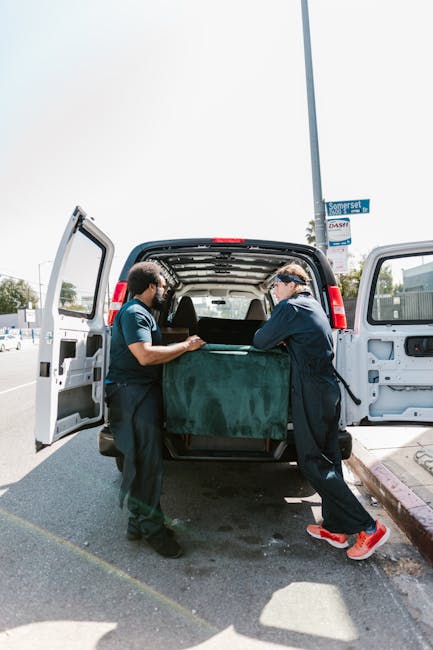
Real cost comparison waste removal vans versus skips Wanstead

If you are weighing up a waste removal van against a skip in Wanstead, the real question is not just "which is cheaper?" It is usually "which gives me the best value once I factor in access, loading time, permit hassle, and how much waste I actually have?" In practice, the right choice can save you money, reduce disruption, and make a messy job feel far less stressful. This guide on the real cost comparison waste removal vans versus skips Wanstead breaks the decision down in plain English, with the kind of detail people often wish they had before ordering anything.
To be fair, most people only compare the headline price. That is where mistakes happen. A skip can look cheaper at first glance, then the permit, road space, and labour at either end change the picture. A van collection can seem pricier, then you realise you are paying for speed, lifting help, and same-day convenience. Different jobs, different maths.
Whether you are clearing a flat, dealing with builders' rubble, or just trying to get a garage back under control, this article will help you judge the options properly and choose with confidence.
Why Real cost comparison waste removal vans versus skips Wanstead Matters
The cost gap between a van collection and a skip is rarely as simple as the quote itself. In Wanstead, where parking can be tight and driveways vary from generous to awkwardly narrow, the practical differences can matter just as much as the price line. If a skip cannot be placed neatly on your property, you may need a permit or extra planning. If a van can pull up, load quickly, and leave, that can remove a lot of friction.
This matters because waste removal is one of those jobs where the hidden costs are often the ones people remember later. There is the skip hire period, the space it occupies, the loading effort, and the risk of overfilling it. There is also the time spent coordinating delivery and collection. Vans, by contrast, are usually more flexible, but their pricing can reflect labour, disposal handling, and vehicle capacity. You are not just paying for transport. You are paying for convenience, speed, and simplicity too.
For household clearances, home clearance needs, or mixed waste jobs, the "cheapest" option can change depending on the actual amount of rubbish and how accessible the property is. And if you are clearing specific items, such as old wardrobes or sofas, it may be worth looking at furniture disposal as part of the wider plan.
There is also a broader value question. Do you want the waste to sit outside for a week, or gone in one visit? Do you want to do the heavy lifting yourself? Do you want the least disruption on a weekday morning when the street is already busy? These are real-world cost factors, even if they do not appear on the first quote.
How Real cost comparison waste removal vans versus skips Wanstead Works
A skip is, in simple terms, a container left on your property or a permitted roadside space for you to fill over a set period. You usually hire it for a fixed duration, and the provider later collects it. The price often reflects skip size, hire length, placement type, and any permit requirements. It is a familiar option and can work well when you are doing an ongoing project and want to load waste gradually.
A waste removal van service is different. The crew arrives with a vehicle, loads the waste for you, and takes it away in one go. The price usually reflects the amount and type of waste, how much labour is involved, and how easy it is to access the material. If the waste is already bagged or stacked neatly, the process is often quicker. If it is spread through a loft, garden, or office floor, the labour element rises.
The key difference is this: skips charge you more for time and container space; van services charge you more for labour and immediacy. That is why comparing only the headline numbers can be misleading.
If your waste comes from a renovation or minor building job, the comparison can be even closer. For example, a builders waste clearance job may suit a van if you want everything gone quickly, but a skip can work if the waste will build up over several days and the site has enough space.
In real life, you also need to think about who is doing the loading. With a skip, the lifting is usually your job. With a van, the crew does the loading, which matters a lot if the waste is bulky, dusty, or awkward. Let's face it, carrying broken plasterboard down stairs on a wet Tuesday is nobody's idea of a good time.
Key Benefits and Practical Advantages
Both options can be the right answer, but they shine in different situations. A skip can feel straightforward if you have space and time. A van can feel like a relief if you want everything handled with less fuss.
Benefits of a waste removal van
- Fast turnaround: often collected in a single visit, which is handy if you want the space clear the same day.
- No skip sitting outside: better for kerb appeal, neighbours, and avoiding a pile of waste on the street.
- Labour included: the team loads the waste, which is a big plus for heavy or awkward items.
- Flexible for mixed waste: useful when you have furniture, bags, and general clutter together.
- Good for restricted access: often easier where a skip lorry would struggle.
Benefits of a skip
- Good for gradual filling: useful if waste is generated over several days or weeks.
- Simple for DIY projects: if you are already doing the lifting, the skip can be cost-effective.
- Predictable container size: useful when you can estimate volume fairly well.
- Can suit larger ongoing jobs: especially where there is ample driveway or site space.
For a lot of Wanstead households, the deciding factor is convenience versus control. If you want the waste gone quickly with minimal lifting, a van often wins. If you are mid-renovation and expect the pile to grow over time, a skip can make more sense. A good rule of thumb? The more uncertain your waste volume and the tighter your access, the more attractive a van becomes.
And if the job involves rooms full of belongings rather than just loose rubbish, services such as house clearance, flat clearance, or garage clearance may be a better fit than a simple skip hire arrangement.
Who This Is For and When It Makes Sense
This comparison is most useful if you are trying to make a sensible call rather than just pick the lowest quote on paper. That usually means one of four situations.
- Homeowners decluttering a property: if the waste includes mixed household items, a van service may be more cost-efficient once loading is included.
- Landlords and letting agents: for end-of-tenancy clear-outs, van collections can save time when there is furniture, bagged waste, and odd items mixed together.
- DIYers and renovators: skips can work well when waste is created gradually and the site has space.
- Small businesses: offices, retail units, and stockrooms often benefit from swift collections, especially if disruption needs to be minimal.
If you are clearing workspaces, office clearance or business waste removal may be more practical than leaving a skip outside for days. The same logic applies to lofts and storage spaces where access is awkward and the job is bigger than it first looks. In those cases, loft clearance can save a surprising amount of back-and-forth.
It also makes sense for garden and seasonal clear-outs. A pile of branches, soil bags, old pots, and broken furniture is not always skip-friendly in the neat, tidy sense people imagine. Sometimes it is better to have one crew load it, sort it, and be done. Particularly when the weather is doing its usual London thing: fine for five minutes, then suddenly not.
Step-by-Step Guidance
If you want a fair comparison, do not start with the provider. Start with the waste itself. That sounds obvious, but people skip this part all the time, then wonder why the quote was off. Here is a cleaner way to approach it.
- List what needs removing. Separate bulky items, bagged waste, rubble, wood, green waste, and anything recyclable.
- Estimate volume. Think in terms of how much floor space it takes up, not just the number of bags.
- Check access. Stairs, narrow gates, basement rooms, parking restrictions, and distance from the road can all affect price.
- Decide whether you can load it yourself. If yes, a skip may be viable. If not, a van often becomes better value.
- Compare like for like. Look at total cost, including permit needs, labour, disposal, and any waiting time.
- Ask what is excluded. Heavy materials, mattresses, electrical items, or special waste can change the quote.
- Choose the option that best fits your timeline. Urgent jobs usually favour vans; slow-burn projects may suit skips.
A small but useful detail: make sure your waste is easy to see before you request pricing. A quick photo set in daylight can help a provider judge the job properly. Even a slightly messy garage looks different once you have stacked the items into rough groups.
If you are working through mixed household clutter, you may also want to review furniture clearance or furniture disposal depending on whether the main issue is old furniture or general waste. That can stop you paying for the wrong type of collection. Simple, really. But easy to miss.
Expert Tips for Better Results
Here are the sorts of things that make a real difference in day-to-day jobs. Not glamorous, but they save money.
- Bundle waste sensibly. Bag loose rubbish, stack wood together, and keep recyclables separate where possible.
- Measure access points. A few centimetres can matter if a large item needs to pass through a narrow hall or up a stairwell.
- Think in terms of labour minutes. The longer it takes to carry waste from the house to the vehicle, the more you are likely to pay.
- Keep one area clear for loading. It sounds minor, but it speeds things up and reduces awkward lifting.
- Do not over-order capacity. A too-large skip can be wasteful; a too-large van load can push price up for no reason.
- Check whether the crew handles sorting. Proper sorting can improve recycling outcomes and reduce mess.
In our experience, people often underestimate how much time is lost by small obstacles: a garden gate that sticks, a narrow turn at the top of the stairs, a pile of unrelated clutter in front of the real waste. Those things add up. They always do.
If sustainability matters to you, ask how materials are handled after collection. The recycling and sustainability approach matters whether you choose a skip or a van. The best option is not just the cheapest one; it is the one that handles the waste responsibly without making your life harder.
Common Mistakes to Avoid
A lot of poor decisions come from rushing the estimate. Here are the big ones to watch for.
- Comparing only the base price: if one option includes labour and the other does not, the comparison is not fair.
- Forgetting about permits: roadside skips can require extra planning and extra cost.
- Underestimating volume: a half-filled skip can end up being poor value; an overloaded one can cause problems.
- Ignoring access issues: a property that looks easy from the front can be awkward once the waste has to come through the back or upstairs.
- Mixing restricted materials without asking: certain items may need separate handling.
- Choosing speed without checking the load size: a same-day van collection is great, unless your waste is larger than expected.
Another common slip: people assume skips are always cheaper for "lots of rubbish." Not necessarily. Once you include permit costs, time on site, and the labour you are doing yourself, the answer can flip. Sometimes the van is the better deal. Sometimes it is not. That's the honest bit.
Tools, Resources and Recommendations
You do not need fancy software to make a good decision, but a few simple tools help.
- Room-by-room photos: useful for judging volume and access.
- Basic measuring tape: helpful for doors, stairwells, gates, and loading points.
- A rough waste list: write down bulky items, bag counts, and anything special.
- A calendar view: if you are coordinating with builders, moving dates, or tenants, timing matters more than people expect.
As a practical next step, it is worth comparing your wider needs too. If the job is not just waste, but a larger property reset, services like home clearance, house clearance, or even garage clearance can be better than piecing together a skip plus DIY labour. That can be especially true in Wanstead where parking and access can make the whole thing a bit fiddly.
For pricing support, the most useful page to review is pricing and quotes. A sensible quote process should make it clear what is included, what might change the price, and whether labour is part of the service. Clear pricing beats clever pricing every time.
Law, Compliance, Standards, or Best Practice
When comparing waste removal options, compliance should not be an afterthought. In the UK, householders and businesses still have a responsibility to make sure waste is handled by a legitimate operator and disposed of properly. That applies whether you hire a skip or book a van collection.
Good practice includes checking that the service is clear about what it accepts, how materials are sorted, and where waste goes after collection. You do not need to become a legal expert, but you should be comfortable asking sensible questions. If a quote looks unusually low, that is a reason to pause, not a reason to celebrate.
For larger or mixed jobs, especially where there is office equipment or commercial material, office clearance and business waste removal should be handled with particular care. Not because every job is complex, but because businesses often need a cleaner paper trail and more predictable handling.
There is also the practical side of safety. Heavy lifting, broken materials, sharp edges, dust, and damp waste can all create avoidable risks. A provider with a proper health and safety policy and sensible working methods is worth paying attention to. Likewise, it is reassuring when a company is open about insurance and safety, because accidents do happen and you want to know where responsibility sits.
Options, Methods, or Comparison Table
Here is a straightforward comparison to help you decide faster.
| Factor | Waste removal van | Skip |
|---|---|---|
| Upfront cost | Often higher-looking at first, but labour is usually included | Can look cheaper initially, especially for self-loading |
| Labour | Team loads the waste | You usually load it yourself |
| Speed | Usually very fast, often one visit | Can stay on site for days or longer |
| Access | Better for tight or awkward access | Needs enough space for delivery and placement |
| Best for | Mixed waste, furniture, urgent clearances, awkward properties | DIY jobs, gradual waste build-up, sites with room to spare |
| Hidden costs | Can rise with labour time and difficult loading | Can rise with permits, overfilling risk, and longer hire periods |
Expert summary: if access is awkward or you want the work handled for you, the van usually gives better real-world value. If you have space, time, and the ability to load the waste yourself, a skip can be efficient. The "best" option is the one that fits the job, not the brochure.
Case Study or Real-World Example
Imagine a typical Wanstead side-return clear-out. The household has broken shelving, a few bags of mixed rubbish, an old sofa, and some leftover bits from a small decorating job. At first glance, the owner thinks a skip will be cheapest. It seems neat enough: park it, fill it, done.
Then they realise the street space is tight. A permit may be needed. The sofa is awkward to carry. The bags are already in the back bedroom, up a narrow staircase. Suddenly the "cheap" option is not quite as clean-cut as it looked.
In that kind of scenario, a van collection often makes more sense because the crew can remove the items in one go, including the furniture and the mixed waste. The price may not be the absolute lowest number on the page, but the actual cost to the homeowner is lower once you count time, effort, and hassle. That is the bit people often forget.
Now flip the scenario. Say you are doing a slow DIY refurb and producing plaster, timber offcuts, old tiles, and packaging over two weekends. You have a drive, space for a skip, and the waste will keep coming. In that case, a skip can absolutely be the better value. You load at your own pace and avoid multiple collections. Simple. Different job, different answer.
Practical Checklist
Use this before you book anything.
- Have I listed all the waste clearly?
- Do I know roughly how much space it takes up?
- Can I load it myself, or do I need help?
- Is access straightforward enough for a skip delivery?
- Would a van save time because the waste is ready to go?
- Have I checked for permit, labour, or disposal extras?
- Do I know whether the waste is mixed, bulky, heavy, or restricted?
- Do I want same-day removal or can it wait?
- Would a specialist clearance service be better than general waste hire?
- Have I compared total value rather than just the headline quote?
If your answer to several of those is "not really," that is fine. Most people are not planning waste removals every week. But it does mean a quick quote conversation can save you time and money. No shame in that at all.
Get a free quote today and see how much you can save.
Conclusion
The real cost comparison between waste removal vans and skips in Wanstead comes down to more than the starting price. Think about access, labour, time, permit risk, and how quickly you need the space back. A van usually gives better value when the job is awkward, urgent, or labour-heavy. A skip can be more economical when you have room, time, and a steady stream of waste to add over several days.
The best decision is the one that matches the job in front of you. Not the one that sounds cheapest in theory. Not the one your neighbour used last time. The one that actually fits your property, your schedule, and your sanity.
If you take one thing from this guide, let it be this: compare the full job, not just the container or the van. That is where the real saving sits.
Frequently Asked Questions
Is a waste removal van cheaper than a skip in Wanstead?
Sometimes yes, sometimes no. A van can be better value when labour, access, and speed are factored in. A skip may be cheaper if you can load it yourself and have easy space for it.
Which option is better for a small house clearance?
A van is often better for a small house clearance because the team can load everything in one visit, including bulky items. If you want broader support, house clearance is usually a more natural fit than skip hire.
Do skips require a permit in Wanstead?
They can, depending on where the skip is placed. If it sits on private property, the rules are usually simpler. If it goes on a road or pavement area, extra permissions may be needed. Always check before you book.
What waste is better suited to a van collection?
Mixed household waste, furniture, clutter from lofts or garages, and awkward items tend to suit a van collection well. It is especially useful when the waste is ready to be taken away in one go.
What waste is better suited to a skip?
DIY waste, ongoing renovation debris, and material that will build up over time can suit a skip, provided you have enough space and are happy to do the loading.
Can I mix furniture and general rubbish in one collection?
Usually yes, but it depends on the service and the waste type. For mixed loads, a service such as furniture disposal or general waste removal may be the cleaner option.
Is a same-day van collection worth paying for?
If you need the space back quickly, yes. Same-day removal can be worth it because it saves you from living with the mess, delaying other work, or taking time off again later.
What makes the price of a van collection go up?
Volume, weight, labour time, awkward access, and the type of waste can all affect the price. If the waste is spread across several rooms or floors, that usually matters.
What makes a skip hire quote go up?
Skip size, hire length, placement, permit needs, and the risk of overfilling can all change the total cost. The container itself is only part of the story.
Should I choose a skip if I'm doing DIY at home?
Often yes, if you have space and the work will produce waste over several days. If you are just doing a one-off clear-out, a van may be more practical.
How do I avoid overpaying for waste removal?
Get a clear list of what is included, compare total costs rather than base prices, and make sure the provider understands the volume and access before quoting. A few good photos can help a lot.
Does sustainability matter when choosing between vans and skips?
Yes. The greener option is the one that handles waste properly and prioritises sorting and recycling where possible. You can learn more about the approach on the recycling and sustainability page.
When should I book a specialist clearance instead of a skip?
If the job involves furniture, multiple rooms, loft contents, office items, or a mix of clutter that is awkward to load, a specialist clearance is often the better call. It saves time and usually reduces hassle, which is worth a lot on a busy week.
If you are still deciding, take a minute, look at the waste properly, and choose the option that makes the whole job lighter. That is usually the right one.